1358
1358
何謂同類相食(殘食)?
在魚類學中,魚類的同類相食又稱為殘食(cannibalism)指的是同種個體之間的掠食行為(intraspecific predation),即較大的個體捕食同類較小個體的行為。若只是攻擊而未吞食,則僅屬於爭鬥行為(agonistic behavior),而若攝食的對象已死亡,則屬於腐食(scavenging)。研究顯示,殘食現象在自然界並不罕見,且多發生於魚類的早期生活階段,如卵、仔魚或稚魚時期。
石斑魚苗的殘食特性
點帶石斑魚苗開始出現殘食行為的時間大約在體長 16 mm左右,但發生頻率最高的階段則是變態後、體長約 25 mm(俗稱「收翅」階段)。這種行為會持續至魚苗約 5 cm左右。在殘食過程中,攻擊者通常會從頭部咬住並將獵物吞食。若攻擊者的口寬(MW)小於獵物的體高(BD),吞食可能會失敗,導致雙方皆死亡。因此,透過測量魚苗的口寬與體高,可以推估出殘食發生的體長比例。研究顯示,殘食者的體長只要比獵物大約 30%,就有足夠的能力將其吞噬。
如何降低石斑魚苗的殘食?
影響魚苗殘食的因素主要可分為環境因子與遺傳因子兩大類。
- 環境因素:
- 餵食策略:增加餵食頻率(每日 3–4 次)可有效降低殘食率
- 養殖密度:雖然密度增加可能提高殘食風險,但影響程度不顯著
- 遮蔽物:部分研究認為提供遮蔽物可減少殘食,但效果尚不確定
- 光照影響:研究發現,黑暗環境下殘食率較高
- 遺傳因素:
- 體型差異:魚苗成長速度不同會造成體型差異,較大的個體容易攻擊較小的個體,因此定期分級(routine grading)是最有效的防範方法之一
- 生理調控:科學家發現,血清動素(serotonin)可抑制攻擊行為,而其前驅物色胺酸(tryptophan)可透過飼料補充。研究顯示,餵食含色胺酸的飼料可降低石斑魚苗的殘食率,但同時可能影響生長速度,仍需進一步研究
石斑魚的種苗培育是養殖產業發展的基礎,而降低石斑魚苗的殘食率,對提升育成率至關重要。透過科學管理、合理餵食與分級操作,可以有效減少魚苗的死亡,進而提高石斑魚養殖的效益。
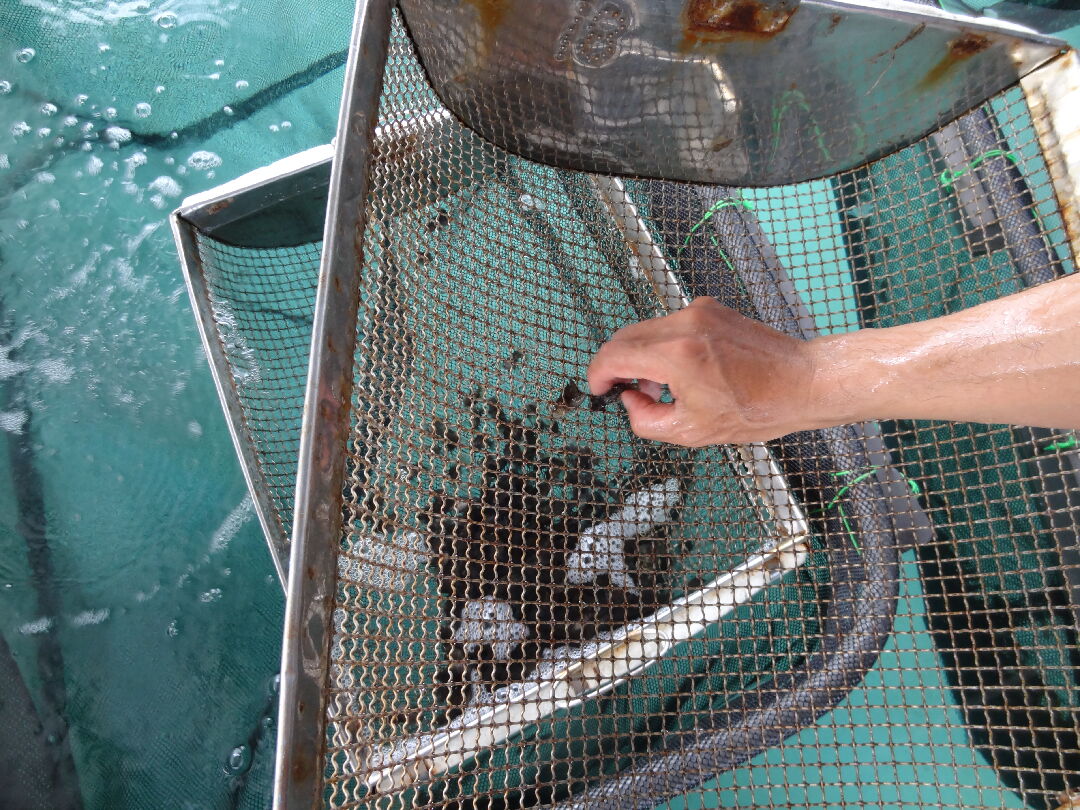
圖. 透過特定網目的篩網將體型不同的石斑魚苗篩分開,有助於避免同類相食
Cannibalism in fish refers to a form of intraspecific predation, where individuals of the same species prey on one another. In aquaculture and fish biology, this behavior is commonly observed when larger individuals consume smaller conspecifics. If fish only attack each other without ingestion, it is classified as agonistic behavior. If they consume already dead individuals, it is considered scavenging. Studies have shown that cannibalism is relatively common in nature, particularly during early life stages such as eggs, larvae, and juveniles.
Cannibalism in grouper juveniles
In grouper species, cannibalistic behavior begins when juveniles reach approximately 16 mm in total length. The highest incidence typically occurs after metamorphosis, around 25 mm in length, a stage commonly referred to as the “fin development” stage. This behavior can persist until the fish reach about 5 cm.
During cannibalism, the predator usually attacks from the head and attempts to swallow the prey whole. If the predator's mouth width (MW) is smaller than the prey’s body depth (BD), ingestion may fail, often resulting in the death of both individuals. Therefore, measuring mouth width and body depth can help predict the likelihood of cannibalism. Research indicates that a predator only needs to be about 30% larger than its prey to successfully consume it.
How to reduce cannibalism in grouper juveniles
Factors influencing cannibalism can be broadly divided into environmental and genetic components.
Environmental factors:
-
Feeding strategy: Increasing feeding frequency (e.g., 3–4 times per day) can effectively reduce cannibalism.
-
Stocking density: Higher density may increase cannibalism risk, but its effect is generally not significant.
-
Shelter: Providing shelters may reduce cannibalism, although results are inconsistent.
-
Light conditions: Cannibalism rates are higher under dark conditions.
Genetic and physiological factors:
-
Size variation: Differences in growth rates lead to size heterogeneity, where larger individuals prey on smaller ones. Routine grading is therefore one of the most effective management practices.
-
Physiological regulation: Serotonin is known to suppress aggressive behavior. Its precursor, tryptophan, can be supplemented through feed. Studies suggest that tryptophan-enriched diets can reduce cannibalism in grouper juveniles, although they may also affect growth performance and require further investigation.
The successful production of grouper seed is fundamental to aquaculture development. Reducing cannibalism in juvenile fish is crucial for improving survival rates. Through proper management, optimized feeding strategies, and regular size grading, mortality can be minimized, ultimately enhancing the efficiency and profitability of grouper farming.
附件
 1 則留言
1 則留言