548
548
根據最適覓食理論(optimal foraging theory),動物會選擇能量消耗最少、獲得最多營養的獵物。因此,石斑魚苗通常會攻擊比自己小的同類,以減少捕食的體力消耗。而當魚苗的體型逐漸拉開差距時,體型較小的個體就成為被優先攻擊的對象。
殘食如何影響魚群分布?
研究發現,石斑魚苗的體長頻度分布(也就是魚群內各種體型個體的比例)會隨時間變化。剛開始時,魚苗的體型差異較小,分布較平均;但隨著時間推移,較小的個體逐漸被殘食,剩下來的魚群則以中、大型個體為主,形成雙峰分布(也就是大魚和中型魚的數量較多,小魚則越來越少)。
當魚群的最大體長與最小體長的比例超過 1.3 倍時,殘食行為開始頻繁發生。當這個比例增加到 1.69 倍時,殘食率會急劇上升。但隨著魚苗變大,逃脫能力增強,被吞食的風險反而降低,因此殘食率會逐漸趨緩。
在石斑魚苗的生長過程中,殘食不僅是生存競爭的結果,也影響了魚群的組成。雖然從自然選擇的角度來看,這是一種「篩選機制」,讓成長較快的個體存活,但對養殖業來說,過高的殘食率會造成魚苗大量損失。因此,透過適當的管理,可以減少魚苗之間的自相殘殺,提升養殖成功率,確保每尾石斑魚都能順利成長。
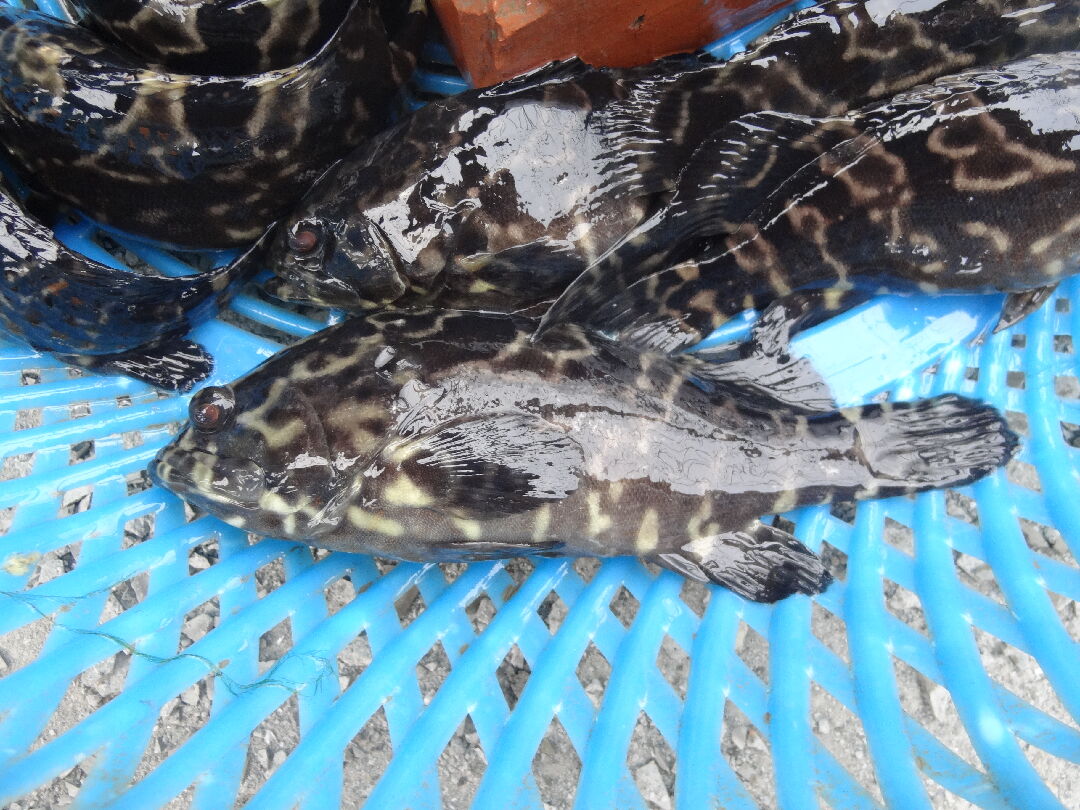
圖. 減少魚苗之間的自相殘殺,可提升養殖成功率,確保每尾石斑魚都能順利成長
According to optimal foraging theory, animals tend to select prey that provides the greatest nutritional return for the least energy cost. For grouper juveniles, this means they often target smaller individuals of the same species, as these are easier to capture and consume. As size differences within a cohort increase, smaller fish become the primary targets of cannibalism.
How does cannibalism affect population structure?
Studies show that the size-frequency distribution of grouper juveniles—that is, the proportion of individuals of different sizes within a population—changes over time. At early stages, size variation is relatively small and the distribution is fairly uniform. However, as time progresses, smaller individuals are gradually removed through cannibalism. The remaining population becomes dominated by medium and large fish, forming a bimodal distribution, where intermediate and larger size classes are more abundant while small individuals become increasingly rare.
Cannibalism becomes more frequent when the ratio of the largest to the smallest individuals in a group exceeds 1.3. When this ratio reaches around 1.69, the cannibalism rate increases sharply. However, as juveniles grow larger, their escape ability improves, reducing their vulnerability to predation. As a result, the overall cannibalism rate tends to level off over time.
In the growth process of grouper juveniles, cannibalism is not only a consequence of competition for survival but also a factor shaping population structure. From a natural selection perspective, it acts as a filtering mechanism that favors faster-growing individuals. However, in aquaculture, excessive cannibalism leads to significant losses of juveniles. Therefore, proper management practices are essential to reduce cannibalism, improve survival rates, and ensure the successful growth of cultured groupers.
附件
 1 則留言
1 則留言